

Editor’s note: Today’s piece is from Turner Caldwell, Co-founder and CEO Mariana Minerals. You can view the original here. It’s a fantastic primer on where copper comes from, why it matters, and how we’re going to produce it in the near future. -AD
Located in southeastern Utah, Mariana Copper One is an operating copper mine and refinery currently producing high-purity copper cathode for the U.S. market. The site, which we acquired in late 2025, has been operating for over 15 years and includes an existing open pit mine, a heap bioleaching operation, a hydrometallurgical refining circuit utilizing solvent extraction and electrowinning, and significant expansion potential. Over the past 12 months, Mariana partnered with the existing site team - previously Lisbon Valley Mining Company - to develop and deploy advanced software and autonomous systems that will overcome past operational challenges and expand copper output.
Our path forward is clear:
This is Physical AI at scale.
Copper is the circulatory system of the modern economy. Nicknamed “Dr. Copper” for its ability to diagnose economic health, copper is central to power generation, supply and conversion, AI datacenter build-out, residential, commercial and industrial infrastructure, electric vehicles, grid-scale energy storage, and advanced defense systems. Anywhere electricity is generated or consumed, copper is at work.
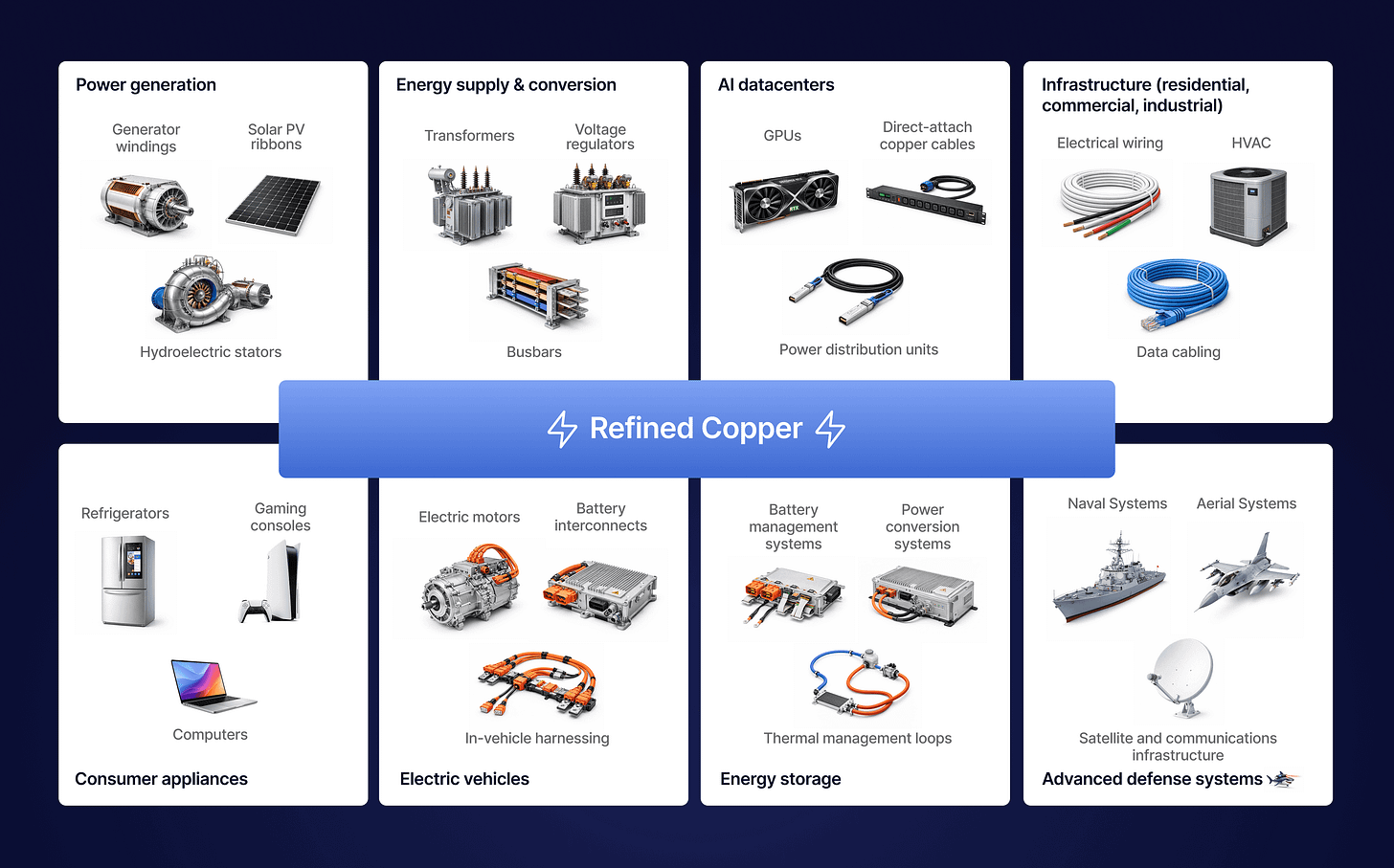
As our global energy, transport, infrastructure, and defense systems modernize, we need copper. A lot of it. By 2050, we must double global copper mining and refining capacity - this means mining and refining more copper in the next 25 years than in all human history combined.
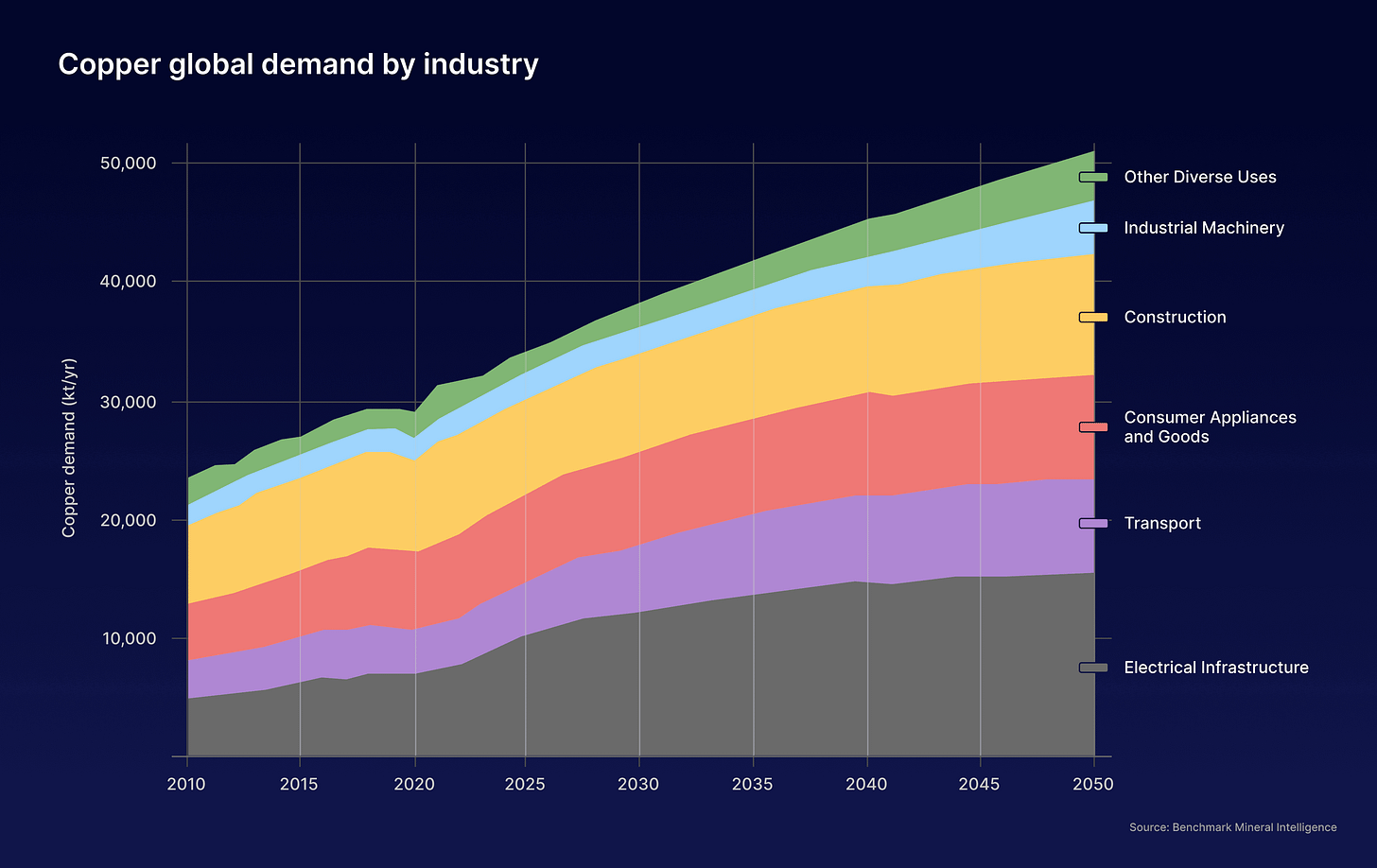
In thinking about how we will produce enough copper to meet accelerating demand, it’s important to first understand how copper is mined and refined today. We’ll start with the high-level and provide additional details around Mariana’s mining and refining pathway in subsequent posts.
Primary copper supply (mined copper) typically comes from 2 types of ores: copper sulfides and copper oxides. These ores are mined via open pit or underground mining, then processed through 2 common pathways - pyrometallurgy (high-temperature smelting) and hydrometallurgy (chemical leaching and solvent extraction) - to produce high-purity copper cathode for downstream manufacturing.
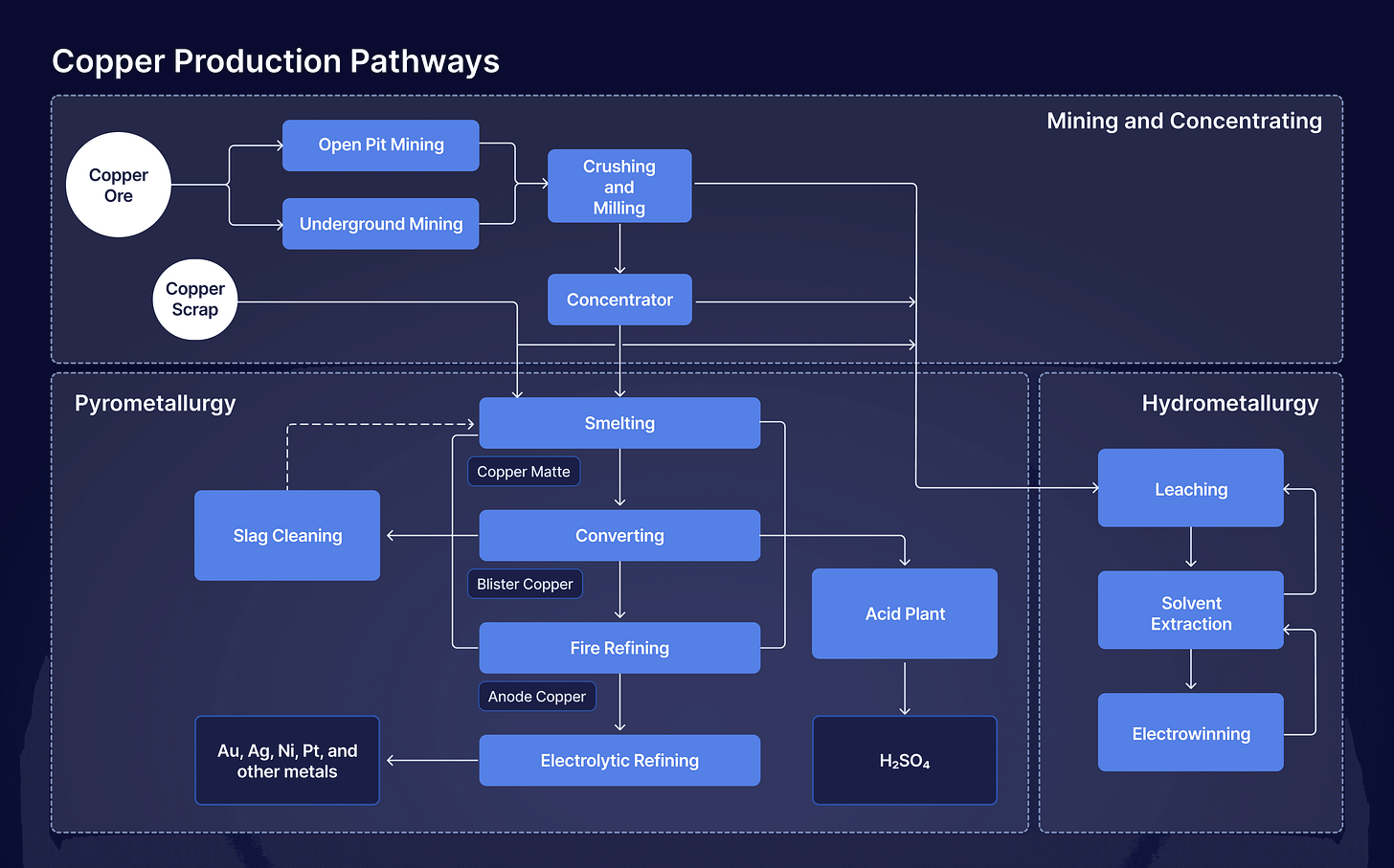
Building a robust, sustainable copper business requires a deep understanding of both the mineralogy of various ore types and of the metallurgical processes involved in concentration and refining. These are inextricably linked - processing and refining pathways cannot be developed independently of the ores being processed. This is ultimately what leads to the bespoke nature of the mining industry: what works at one site with one type of rock does not work at another. This is a major driver of the complexity involved in expanding copper production capacity globally.
Copper production and trade are highly concentrated. A small group of mining countries - Chile, Peru, Indonesia, Australia and Brazil - account for the majority of global copper ore exports, reflecting the concentration of major deposits in the Andes and Asia-Pacific regions. On the demand side, China dominates as the world’s largest importer, with Japan and South Korea also serving as major buyers.