Small models get better, regulation moves to the states, and more.
The new AI Index Report shows a maturing field, improvements in AI optimization, and a growing saturation of use - and abuse - of this technology.
The 2025 AI Index Report, published on April 7, 2025, is an independent initiative at the Stanford Institute for Human-Centered Artificial Intelligence (HAI), led by the AI Index Steering Committee, an interdisciplinary group of experts from across academia and industry.
Each year, the report covers the biggest technical advances, new achievements in benchmarking, investment flowing into generative AI, education trends, legislation around this technology, and more.
Read the full report here, or see below for 10 key takeaways:
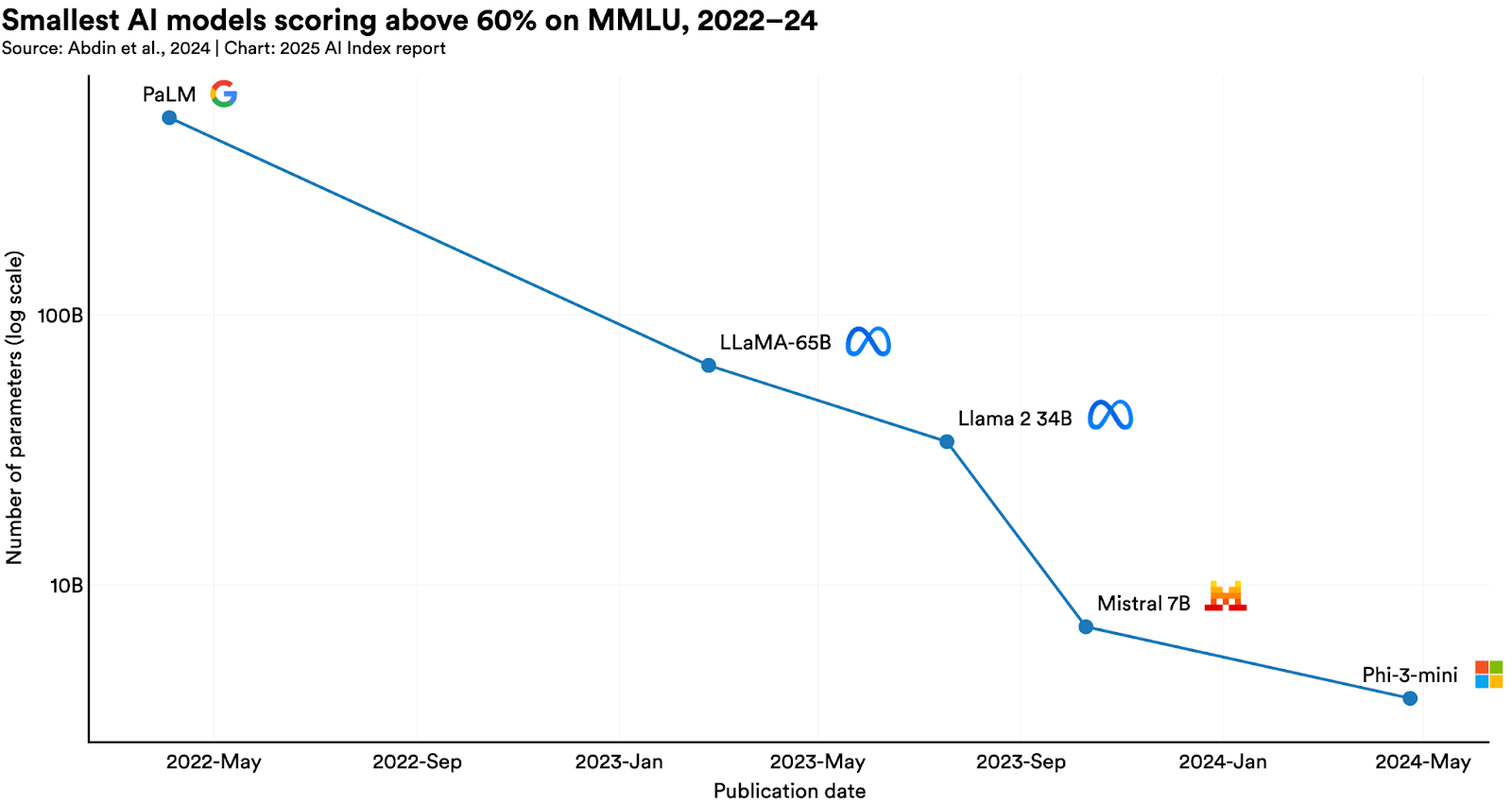
In 2022, the smallest model registering a score higher than 60% on the Massive Multitask Language Understanding (MMLU) benchmark was PaLM, with 540 billion parameters. By 2024, Microsoft’s Phi-3-mini, with just 3.8 billion parameters, achieved the same threshold. This represents a 142-fold reduction in over two years.
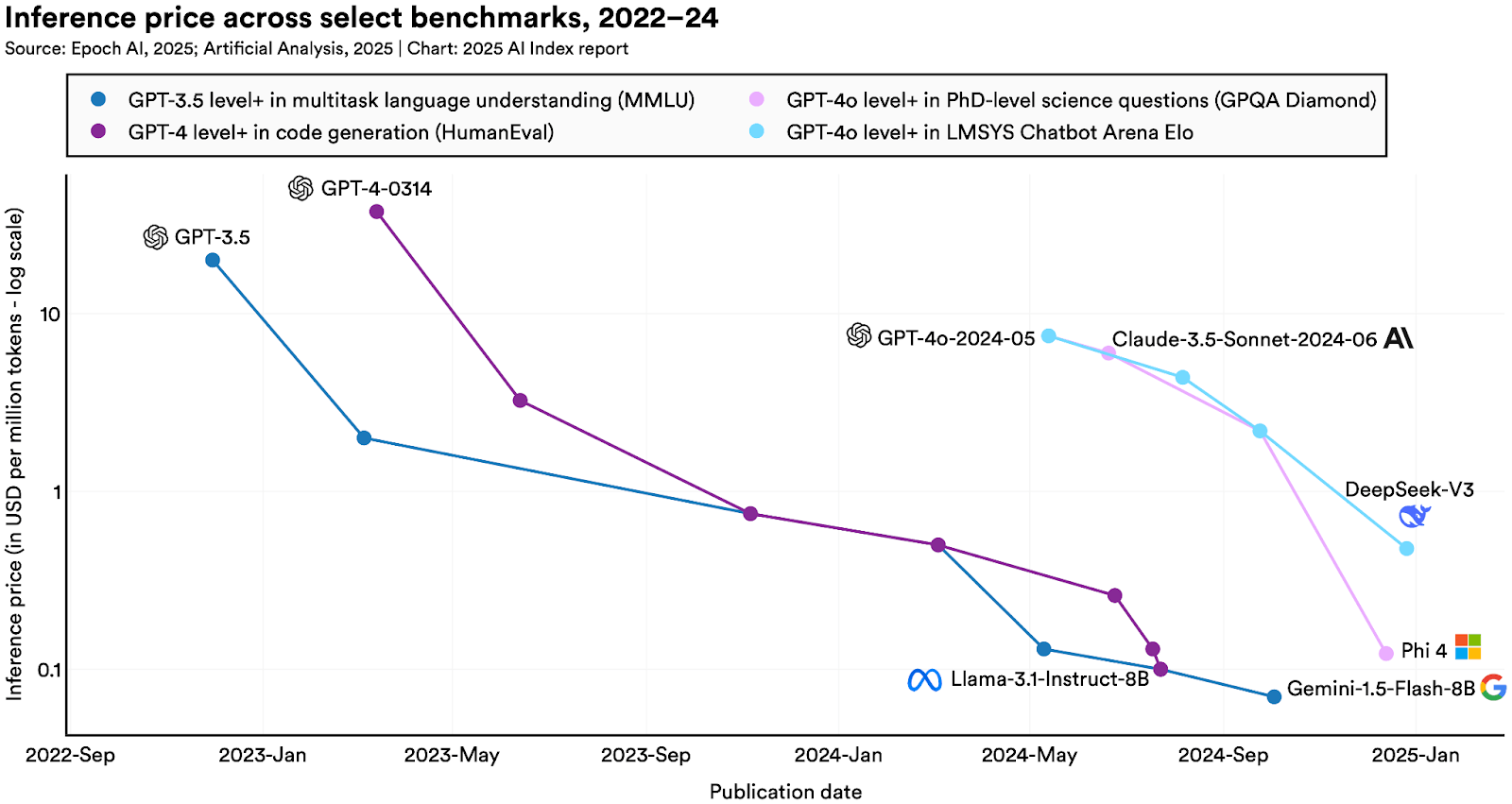
The cost of querying an AI model that scores the equivalent of GPT-3.5 (64.8% accuracy) on MMLU dropped from $20 per million tokens in November 2022 to just $0.07 per million tokens by October 2024 (Gemini-1.5-Flash-8B)—a more than 280-fold reduction in approximately 18 months. Depending on the task, LLM inference prices have fallen anywhere from 9 to 900 times per year.
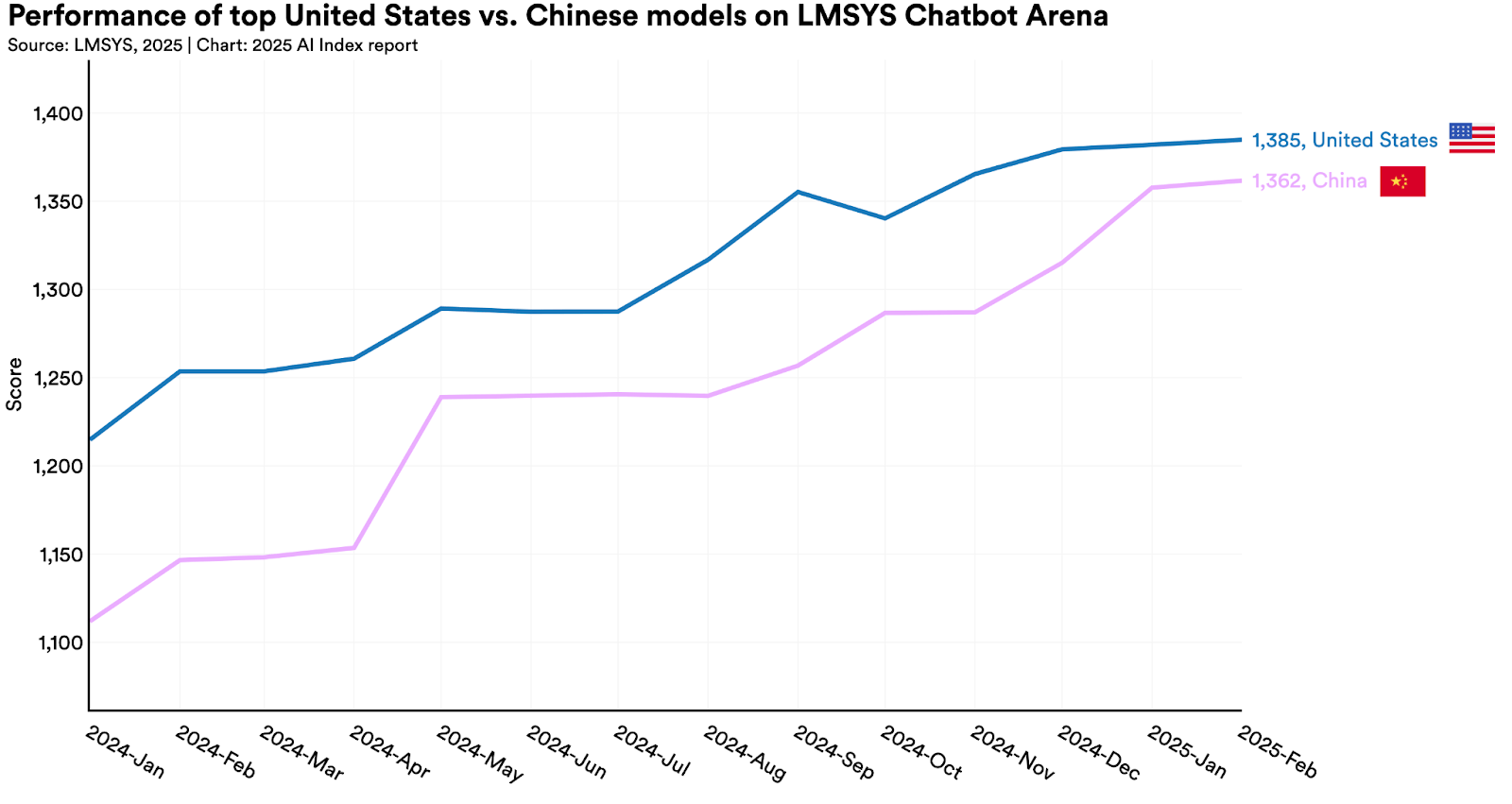
The U.S. still leads in producing top AI models—but China is closing the performance gap. In 2024, U.S.-based institutions produced 40 notable AI models, compared to China’s 15 and Europe’s three. While the U.S. maintains its lead in quantity, Chinese models have rapidly closed the quality gap: performance differences on major benchmarks such as MMLU and HumanEval shrank from double digits in 2023 to near parity in 2024. China also continues to lead in AI publications and patents.
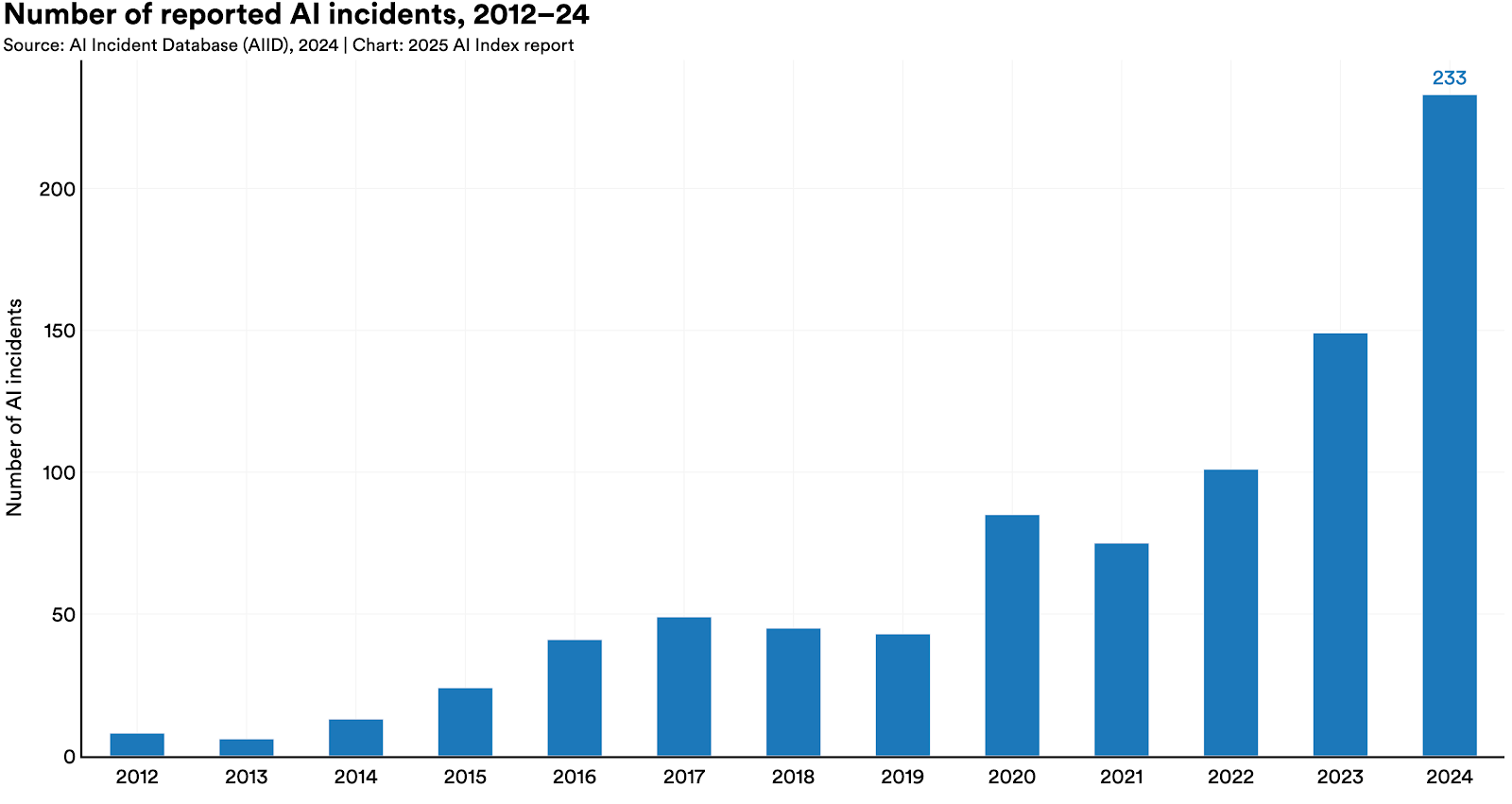
According to one index tracking AI harm, the AI Incidents Database, the number of AI-related incidents rose to 233 in 2024—a record high and a 56.4% increase over 2023. Among the incidents reported were deepfake intimate images and chatbots allegedly implicated in a teenager’s suicide. While this isn’t comprehensive, it does show a staggering increase in issues.